

Businesses managing regular print requirements face recurring challenges around consistency, turnaround times, and cost control. Traditional print ordering often involves multiple phone calls, email exchanges, and manual proofing cycles that consume time and introduce potential errors. An online print ordering system addresses these friction points by centralizing the entire process within a digital platform. Companies can specify requirements, preview outputs, and approve production without the back-and-forth that characterizes conventional workflows.
Web2Print Signs & Printing operates such a platform, active since 2006 and continually refined to meet evolving client needs. Their system serves more than 1,700 clients across New Zealand, from Auckland to Bluff. Founded by Tim Beere in 2010, they have built their operation around the principle that technology should simplify rather than complicate. Their Otaki headquarters on the Kapiti Coast houses production equipment including four wide-format printers, a Canon Image Press, and an Epson SureColor P7560 with 12-colour capability. This equipment range handles everything from business cards to A1-size fine art prints.
Template-driven ordering forms the cornerstone of their platform. Clients can establish branded templates that lock in colours, fonts, logos, and layout specifications. Subsequent orders simply require content updates rather than full redesigns. This approach ensures visual consistency across all materials while reducing the time spent on each order. For businesses with multiple locations or staff members placing orders, templates prevent the brand drift that occurs when different people interpret style guidelines differently. The system stores these templates on secure Amazon servers, making them accessible whenever needed.
Self-proofing tools eliminate another common bottleneck. Rather than waiting for a supplier to generate proofs and send them for approval, clients preview their work directly within the platform. They can verify layout, check for errors, and approve production immediately. This cuts days from traditional timelines, which matters when launching campaigns or responding to market opportunities. Orders typically process and dispatch within 24 hours, reaching clients nationwide via overnight courier. The combination of instant approvals and fast production makes tight deadlines achievable.
Cost considerations extend beyond unit pricing. The labour involved in placing and managing orders represents a hidden expense for many businesses. Manual processes require staff time for phone calls, email coordination, file transfers, and proof reviews. An online print ordering system reduces this administrative burden substantially. Web2Print Signs & Printing passes these efficiency savings directly to clients rather than absorbing them as increased margin. Their Otaki location provides further cost advantages through lower rents and overheads compared to major urban centres.
Marketing departments benefit particularly from template systems. Campaign materials often require versions for different regions, audiences, or channels while maintaining brand coherence. Templates allow teams to generate these variations quickly without starting from scratch each time. A national retail chain, for instance, might need store signage that includes location-specific information but maintains corporate identity standards. The template handles the fixed elements while leaving fields open for customization.
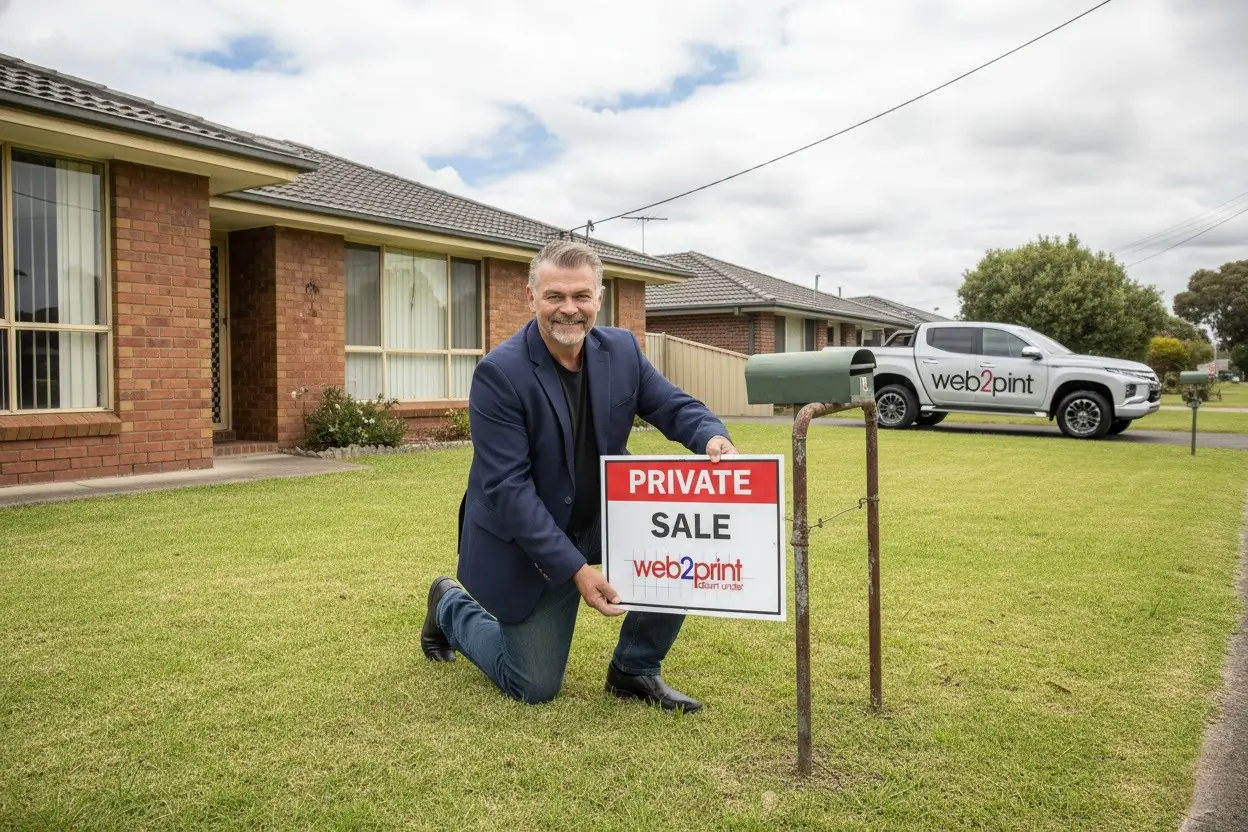
Real estate professionals represent another sector where digital printing platforms deliver clear value. Property marketing moves fast, with listings going live, changing status, or closing within short timeframes. High-visibility coreflute signboards, property photograph copying, and photo signs all need rapid turnaround. Web2Print Signs & Printing provides these materials with specifications already established in client templates. Agents simply input new property details and approve production. The 24-hour dispatch timeline ensures signs arrive before open homes or listing launches.
Election campaigns demonstrate how speed and cost efficiency intersect. Candidates require full-colour coreflute signage that complies with Electoral Commission requirements, often in quantities that vary by location. An online print ordering system lets campaign teams place orders for different areas simultaneously, with each batch processed and dispatched independently. The platform tracks order history, making it straightforward to reorder for additional locations as campaigns expand. This flexibility would prove difficult to manage through traditional ordering methods.
Business stationery and marketing materials form the bread-and-butter work for most print platforms. Business cards on 350gsm Silk Matt Card, brochures ranging from 80gsm to 128gsm paper stock, promotional flyers, and branded notepads all flow through the system. The Canon Image Press produces crisp output across these formats, while finishing options including rounded corners, embossed details, and saddle-stitched binding add professional touches. Clients access their order history to reorder depleted items, with previous specifications automatically applied unless changes are requested.
Label printing presents specific requirements that benefit from systematic ordering. Short-run labels in waterproof vinyl or paper suit applications from food packaging to marine equipment. The Roland wide-format printer produces UV-stable output that withstands outdoor exposure. Businesses ordering labels regularly appreciate having specifications saved within the platform. They can adjust quantities and content while maintaining material choices and dimensions that have proven suitable for their applications.
Signage projects extend from small parking signs to banners reaching 3 meters in height. Business and commercial signage manufactured from UV-stable vinyl on weather-resistant substrates serves shopfronts, buildings, and vehicles. Safety and hazard boards for workplaces arrive printed on fade-proof fluteboard meeting compliance standards. Retractable roll-up banners for events and exhibitions complete the range. Each signage type has different technical requirements around materials, finishing, and installation hardware. The platform manages these specifications so clients need not remember technical details between orders.
Specialized services include fine art giclee printing, which requires different handling than commercial work. The Epson SureColor P7560 combines with a Canon R5 camera to capture and reproduce artwork at A1 size on archival media including cotton rag and gloss photo papers. Artists and galleries use the platform to order reproductions, with colour profiles and print specifications saved for consistency across editions. Copying and scanning services for architectural plans and construction documents round out their capabilities, with large-format plan scanners and printers handling technical drawings.
Graphic design support complements the ordering platform through Gail Mylne of Mixed Media Design, working from the Otaki office. Services include logo creation, branding development, and signage design. This collaborative approach helps businesses establish the templates and specifications that make subsequent ordering efficient. Clients contact them through the platform to discuss design requirements, with revisions incorporated based on feedback. Once designs are finalized, they become templates available for instant reordering.
The operational model reflects careful attention to cost structures. Bulk purchasing of standard products reduces material expenses. Overseas sourcing provides access to quality materials at competitive prices. The reduction in manual labour from automated ordering translates to savings passed to clients. On-demand printing eliminates stockpiling, reducing waste while ensuring fresh production. These choices align with environmental responsibility while maintaining commercial viability. They partner with suppliers who share similar values around sustainability and responsible sourcing.
Customer support remains accessible through telephone and live chat for questions about specifications, material choices, or technical requirements. The Otaki location welcomes clients who prefer face-to-face consultation or need to deliver work directly. Opening hours of 8.30am to 4pm weekdays accommodate most business schedules, with arrangements available outside these times when circumstances require. This accessibility ensures the technology platform enhances rather than replaces human interaction when clients need guidance.
Web2Print Signs & Printing demonstrates how thoughtful implementation of an online print ordering system can transform print procurement from a time-consuming administrative task into a streamlined process. Their platform combines template consistency, self-proofing efficiency, secure storage, and fast turnaround into a package that serves diverse business needs across New Zealand. The system has evolved since 2006 to incorporate user feedback and technological improvements, maintaining relevance as client requirements change. For businesses seeking to reduce ordering friction while maintaining output quality, such platforms offer tangible operational benefits.
Business branding fundamentals – Building strong brand identity
Marketing communication strategies – Effective marketing approaches for businesses
Colour reproduction standards – Understanding CMYK colour models
Document format specifications – PDF technical standards explained
Visual communication design – Graphic design principles and applications